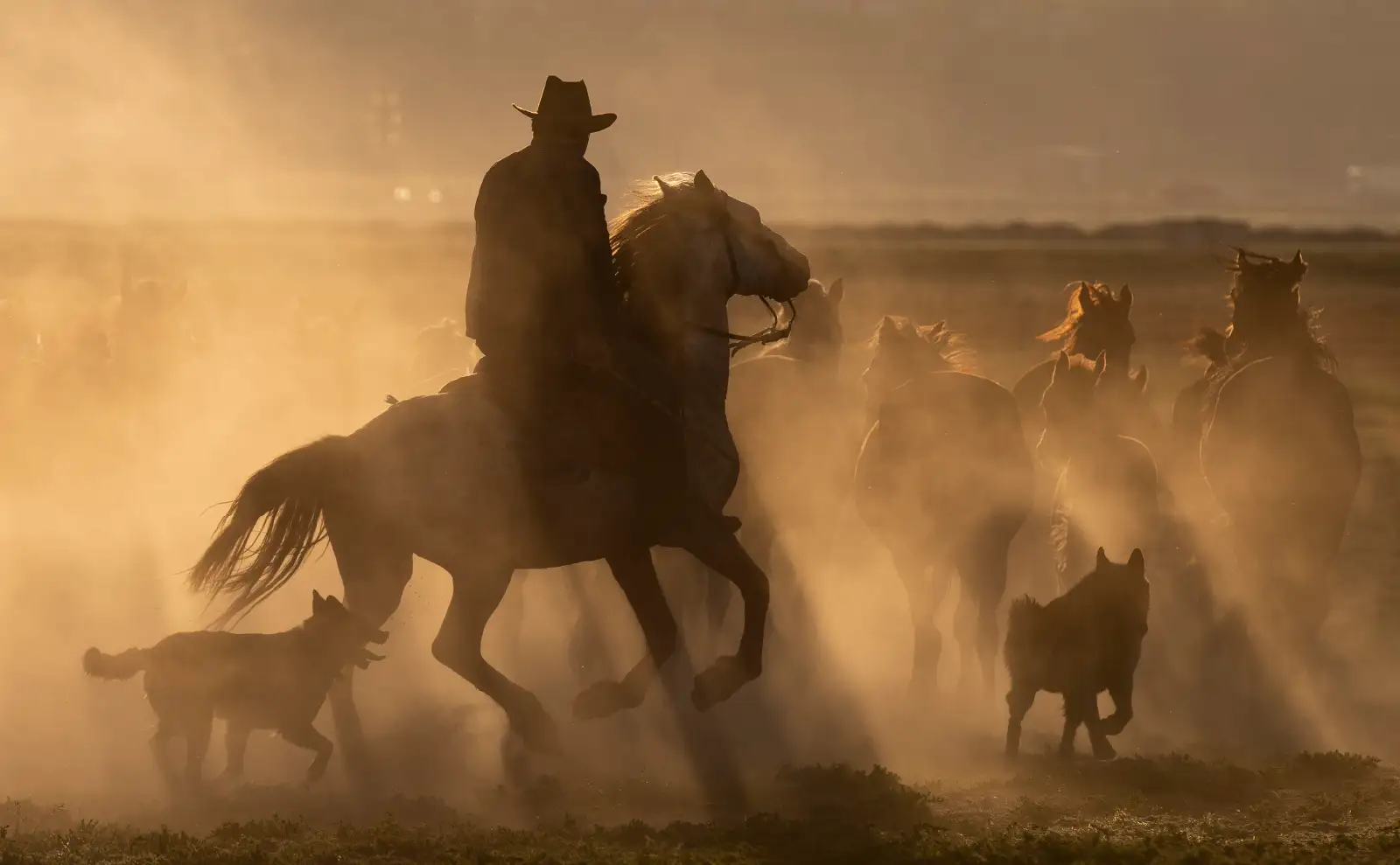

Nothing represents American heritage more clearly than the cowboy and the classic cowboy boot. This beloved symbol of American culture is recognized around the world, celebrated throughout history and Hollywood as a symbol of independence, resilience, and rugged determination in the Wild West.
At their core, cowboy boots represent freedom, hard work, and the values of self-reliance. When you pull on a pair of cowboy boots, you’re stepping into a legacy woven into the fabric of American heritage. But where did these iconic boots originate? Let’s take a look at the history of cowboy boots and how they’ve evolved into a modern fashion staple.
Origins: Built For the Trail
Cowboy boots trace their roots back to the post-Civil War trail drives of Texas and Kansas. Early designs were inspired by military boots, but practical adaptations emerged as cowboys spent long hours riding. One of the key changes came from the way cowboys rode—with their weight on the instep rather than the ball of the foot, like cavalrymen.
To support this, bootmakers began inserting a steel shank into the instep between layers of leather. This innovation provided greater support, allowing cowboys to ride longer without discomfort.
Over time, additional features were introduced. Rounded toes eventually gave way to pointed ones, making it easier for cowboys to slide their feet into stirrups. Taller heels were added to prevent feet from slipping through and getting caught, an important safety feature for preventing dangerous accidents if a rider were thrown from a horse.
Safety & Utility: Designed for Harsh Conditions
As cowboy boots became essential work gear, practical design elements continued to evolve. Taller shafts, often called stovepipes for their straight shape, offered protection against thorny brush, snake bites, and other hazards of cattle drives. These high uppers weren’t just for appearance; they served as protection for the rugged trails ahead.
Bootmakers also introduced scalloped tops to make it easier to pull boots on and off. The shafts were designed to be looser at the top, allowing a cowboy to kick them off quickly if needed. This was an important feature in emergencies.
Cowboy Boots As Fashion
Eventually, cowboy boots moved beyond their working roots and stepped into dance halls and honky-tonks. Musicians, particularly early country and western performers, began wearing boots not just for function but for fashion.
These artists embraced the cowboy image as part of their personal style, helping cowboy boots shift from practical footwear to a cultural symbol. As the music genre evolved, so did the boots, with new colors, patterns, and custom embellishments making their debut on stage.
Hollywood’s Influence on Western Style
By the 1930s, Western films had taken over Hollywood, glamorizing the cowboy lifestyle for audiences everywhere. Moviegoers fell in love with the rugged charm of the big-screen cowboy, complete with hat, spurs, and, of course, cowboy boots.
This pop culture influence helped turn cowboy boots into a fashion statement. Designs became more decorative, featuring intricate stitching, colorful inlays, and exotic leathers such as snakeskin, ostrich, and alligator. Once limited to ranches and rodeos, cowboy boots were now appearing in cities and on red carpets.
Timeless Roots, Modern Appeal
Today’s cowboy boots are just as likely to be seen in a fashion magazine as on a working ranch. Modern boots are handcrafted with care, offering both style and utility. While they’ve come a long way from their humble beginnings, they still represent the same spirit of grit, individuality, and freedom.
Whether worn by rodeo pros, country music stars, or city dwellers, cowboy boots remain a lasting icon of American style. They continue to evolve with fashion trends, yet they never lose touch with the traditions that made them legendary.
Cowboy boots have a history as rich and rugged as the American West itself. Originally designed for durability and safety, they’ve become symbols of personal style and cultural pride. No matter where you’re headed, when you wear cowboy boots, you’re carrying the legacy of the Wild West with every step.